
My mother didn’t watch soap operas, so I don’t know when I was first exposed to them. They have been a part of American culture since October 20, 1930, when WGN in Chicago debuted Painted Dreams. The serialized drama was aimed at its female audience, since most women stayed home and listened to the radio for company. Its immediate success led to Clara, Lu, and Em on NBC’s Blue Network, which began on January 27, 1931. With soap manufacturers as the predominant sponsors, the shows were quickly dubbed soap operas, borrowing the term from horse operas, which were considered low-budget, low-quality western films.
Soaps jumped from radio to television in 1949 with These Are My Children, and ever since, the three major networks have filled afternoons with any number of soaps, which were cheaply produced compared with prime-time programming but offered aspiring actors a great launching pad. The better-written shows featured characters or storylines that entered the social conversation, perhaps best known through the Luke and Laura wedding on General Hospital.
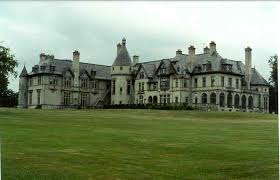
While I enjoyed serial storytelling in my comic books, I wasn’t at all interested in these adult dramas. That is, until sometime in the late 1960s, I found one with a vampire. Dark Shadows debuted on June 27, 1966, a more gothic-inspired mystery series created by Dan Curtis and developed by Art Wallace, focused on Victoria Winters, who arrived in Collinsport, Maine, to work as a governess and learn the truth about her mysterious past. The Collins family was the richest in town, running a successful fishing and cannery business, building Collinwood, a mammoth mansion, and remaining somewhat reclusive, keeping their own family secrets.
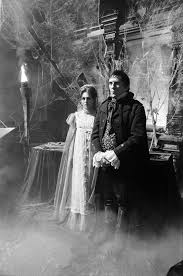
The show was apparently limply paced and didn’t get great reviews until Curtis, threatened with cancellation, added a vampire for a Hail Mary story arc. He hired Canadian actor Jonathan Frid for a thirteen-week run, but a funny thing happened. ABC had briefly moved the show from 4 p.m. to 3:30 p.m., and then Barnabas Collins arrived in April 1967. As school-aged children came home and turned on the TV, they were enthralled by this brooding, handsome vampire.
There had been talk of ghosts, sightings even, in the previous 200+, and the Gothic feel lent itself to the supernatural. And this was on ABC, home to The Addams Family and Bewitched, so they were clearly comfortable with the bizarre.
“In an era when soap operas were defined by domestic melodrama rooted in realism, Dark Shadows used genre to reach a wider audience, bringing in teens and children to a format previously conceived as targeted to housewives by adding horror film tropes to a soap opera structure. As genre positioning changed the audience, genre and audience complicated the narrative assumptions of gender dynamics and social values,” wrote William Svitavsky in his essay “Dark Shadows: Monster Culture on Daytime Television,” appearing in Journal of Popular Film and Television.
Suddenly, the ratings climbed, and there was a buzz about the series that hadn’t previously existed. Frid’s contract was extended, and the entire show shifted from a modern Jane Eyre wannabe to a supernatural thriller. Switching to color on August 11, 1967, certainly didn’t help the gothic atmosphere, but it kept people glued.
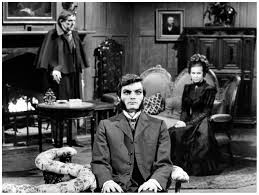
It was well into the Barnabas era when I found the show. I found myself fascinated by the characters and stories, especially as someone would open a door and discover a portal to the past or an alternate reality (pioneering parallel universes on television). Many of the beloved storylines took place in other times with the core cast playing ancestors or entirely different characters. One needed a chart to keep track of these permutations (which exist today, but you had to keep watching back then).
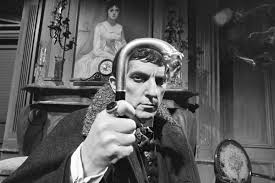
Several of my friends are also deep Dark Shadows fans, including comics historian Peter Sanderson. He’s been rewatching the series and noted he enjoys the show “mainly because of the main character of Barnabas Collins. Even in these early episodes, when Barnabas is a villain, Barnabas is a riveting character, thanks to the charismatic presence and performance of Jonathan Frid. He’s genuinely charming and likable in his dealings with the Collins family, and equally believable in his cruelty towards his victims. Frid’s background playing lead roles in Shakespearean plays gives Barnabas depth and grandeur. And Frid, aided by the writers, made a point from the start of giving him a sympathetic side. Then, in the 18th-century origin sequence, the writers transform Barnabas into a tragic antihero. We see him as a good man who falls under a curse. This was revolutionary at the time: to portray a vampire as a figure we can sympathize with and identify with. As the series progressed, Barnabas became a genuine hero, the protector of the Collins family over the centuries.”
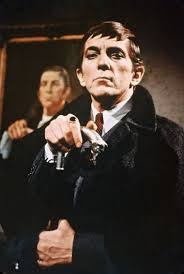
As Lara Parker described it to Den of Geek, “He played the vampire as an anguished, guilt-ridden, deeply soulful, moral person; a vampire with a soul who longed to return to the time before he was cursed, to the life of a mortal. He’s definitely the Aristotelian hero, the hero who is not evil but who made a terrible mistake and thereby suffers.”
“The genius of the Barnabas Collins character,” pop historian Mark Dawidziak told NPR, “was that Barnabas is the first vampire who questions his own nature. Barnabas said, ‘Do I have to be like this?’”
Rich Handley told me, “Dark Shadows appeals to me primarily because I enjoy the Gothic atmosphere, the soap operatic storytelling, and the modern adaptations of classic literature and Universal Monsters motifs. It’s common to see people mock Dark Shadows by claiming it was campy and low-budget, but neither was true. The show may have been unintentionally funny from time to time due to line flubs, visible boom mics, and so on, but the approach was never camp. The writers and actors took the storytelling quite seriously.”
Initially, the series was influenced by Jane Eyre and Rebecca, but once you brought in Barnabas, other Gothic works could be imported from Frankenstein to The Picture of Dorian Gray. They borrowed heavily from these familiar works, tailoring them to the ensemble.
Sanderson added, “There were other strong characters and cast members as well. David Selby, as Quentin Collins, underwent a similar transformation from a sinister menace to a likable rogue. Lara Parker as the witch Angelique was a villain for a long time on the series, but she was genuinely in love with Barnabas, and Angelique evolved into a more complex character over the course of the series. Actors such as Thayer David and Nancy Barrett seemed capable of doing anything in their many roles on the series. And the show had some great villains, such as Humbert Allen Astredo’s Nicholas Blair, Thayer David’s Count Petofi, and Jerry Lacy as three different versions of the religious fanatic Trask. As the show evolved, it took on a more rapid pace than typical soap operas, and each episode ended with a suspenseful cliffhanger. There was a rule that something supernatural had to happen in each episode, and the show conjured a real sense of wonder, as it incorporated versions of every classic horror trope.”
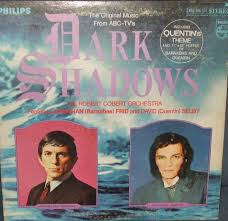
An LP of Robert Cobert’s score was released in September 1969, and I do recall buying it on a hot Saturday. My friend Jeff and I were walking home and got very thirsty, so we ducked into the kitchen of a closed Italian restaurant in the basement of an office building that also housed the original Cablevision offices. The kitchen staff gave us some Cokes, asked us to play the album on their phonograph, and claimed to like the score.
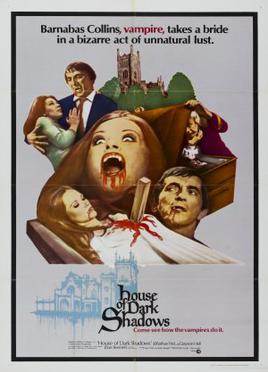
Many of the cast were written out of the serial to film the spin-off film House of Dark Shadows, released in 1970, followed a year later by Night of Dark Shadows. Both provided the blood and thrills the soap avoided, as if they were Hammer releases. That apparently hurt more than it helped, as did the launch of Another World‘s spinoff, Somerset. The show was canceled, and I distinctly remember being at a friend’s house for the first time on April 2, 1971, and insisting we watch the finale even though he had no idea what was going on.
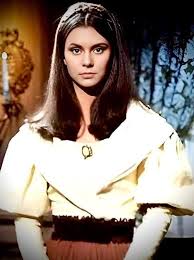
I should note that in its final year, Kate Jackson made one of her earliest television appearances, but I didn’t notice her, although she later became one of my earliest cinema crushes.
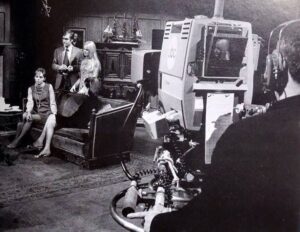
The show was inventive and intriguing, marred by on-screen continuity errors, flubbed lines, moving scenery, etc. They shot at a furious clip, arriving at the West Side Manhattan studio at 8 am, rehearsing all day, and recording promptly at 4 pm, usually in one take per scene. Furiously edited and scored, it aired a week later.
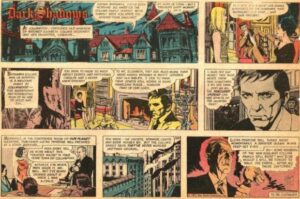
My grandfather used to save the New York Daily News Sunday comics sections for me, and on one visit, I discovered the launch of a Dark Shadows comic strip, drawn very well by Ken Bald. It was a brief run, March 14, 1971, to March 11, 1972, but it was nice to have, as were the 32 Marilyn Ross novels (I bought more than I actually read).
Curtis, of course, continued his vampire theme by producing The Night Stalker for ABC Movie of the Week (January 11, 1972), but that’s another story.
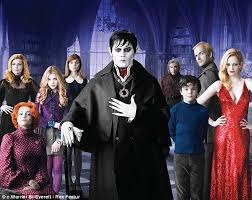
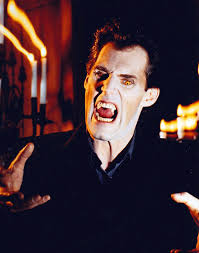
The series developed a rabid fan following, not dissimilar to Star Trek, with Frid becoming a most unlikely sex symbol (much like Spock). There remain conventions and frequent revivals, from a short-lived NBC series starring Ben Cross to the Big Finish audio novels, with surviving members of the original cast participating. And of course, there was Tim Burton’s cheeky adaptation with Johnny Depp and Michelle Pfeiffer that didn’t quite land. The CW pilot for a 2004 reboot, featuring Marley Shelton, Alec Newman, Kelly Hu, Martin Donovan, Blair Brown, and an early performance from future Academy Award winner Jessica Chastain, which wasn’t purchased, can be found on YouTube.
Handley added, “Consider this: The franchise comprises 1,225 episodes, two TV revivals, three feature films, an off-Broadway play, and hundreds of novels, comics, and audios. Yet despite all that material, I’ve experienced all of it multiple times, which demonstrates how pulled in I am. Anyone who watches the show from the beginning, when Victoria Winters arrived in Collinsport by train, can see the dedication that the writers, actors, directors, set designers, costumers, and composer put into it. When I first watched it years ago, I was blown away. I’m currently on my sixth rewatch, and I’m sure there will be more. My next book [The Collins Family Album from Chinbeard Books], due out in the fall of this year, will celebrate the show’s 60th anniversary, in fact. It’s something near and dear to my heart.”
The original series has been captured on some 131 discs if you’re game, and can be found on some streaming services if you have never seen the original. The charms remain, even if the slow pacing will make you grit your teeth.
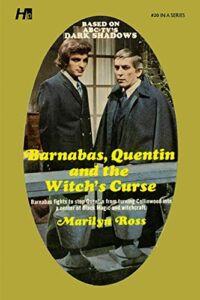
There have been several new novels, mostly written by cast member Lara Parker, while Katherine Leigh Scott has penned numerous nonfiction tributes. Hermes Press has reprinted the Ross novels and recently released a serious graphic novel misfire, Curse of Dark Shadows (unfortunately, with two more installments to follow).
The show’s legacy is more than vampires and werewolves; it has been credited with introducing supernatural elements into modern storytelling, influencing generations of creators and viewers. You can trace Dark Shadows to Buffy to Supernatural to Vampire Diaries.
“I’d say there are a number of factors at play,” Handley speculates. “It took place at a dark and disturbing mansion filled with closed-off wings and spider infestations. It featured ghosts, vampires, werewolves, witches, warlocks, wizards, disembodied heads, immortals, an Egyptian fire phoenix, a Lovecraftian demon cult, time travel, alternate universes, body swapping, mad scientists, Frankensteinian creatures, zombies, poltergeists, revenants, I Ching, hypnotism, the Grim Reaper, living portraits, and even the Devil. And all of this occurred, of all places, on a daytime soap!”
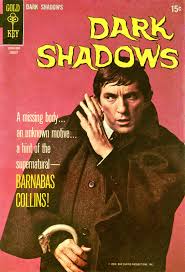
Sanderson concurs, saying, “It is indeed the Show That Will Not Die, because even though it was canceled in 1971, it has kept resurfacing in syndication and streaming and on retro TV networks. I think it’s because Barnabas is such an iconic figure. I first started watching the show in the summer of 1968, when Barnabas had (temporarily) been cured of vampirism, yet the character still captured my attention through his contention with supernatural threats. Barnabas was at his best in the long 1897 sequence telecast in 1969, when he was both a tragic vampire and a self-sacrificing protector of his family. I also think that the scripts and the acting style of the series were very theatrical. The cast was largely made up of New York stage actors, and the stories were well-crafted melodramas. This all gave the show an energy that overcomes its limitations as a low-budget series shot live on tape, with almost never any retakes, leading to the memorable mishaps in various episodes.”
“That was unprecedented at the time, and it remains so to this day,” Handley continues. “Even though there have been soaps with supernatural elements in the post-Dark Shadows world, none have been as successful or as immersive. Dark Shadows, for whatever flaws it had, is in a class by itself. It still draws in new viewers thanks to streaming and DVD, and those who enter that cobwebbed world for the first time often find it charming, unique, and exciting. Sure, they might laugh when an actor says ‘incestors’ instead of ‘ancestors,’ or when an actor completely forgets their lines and stares directly into the camera like an undead deer in headlights. But they end up no less enthralled by the fantastic storytelling.
“What appeals to a lot of fans is the vampire-with-a-conscience approach to Barnabas Collins. Barnabas wasn’t the first vampire character to regret his existence, though many fans have attributed that distinction to him (the first would be Varney, back in Victorian-era penny dreadfuls), but Barnabas was the first to ensnare TV audiences. Without him, we might not have ended up with Angel, Spike, Lestat, and all the other brooding ‘I hate what I am’ vampires of the modern age.”
In this era of reboots and reimaginings, is there a place for more visits to Collinsport? I think so, as long as there is a real vision from a showrunner who understands the, ahem, bones of the original.
Handley agrees, adding, “Yes, but its success would depend on the writers and actors chosen for the task. There have been many licensed spinoffs, some of which (Big Finish, especially) have been very successful at continuing the show’s legacy by bringing back the surviving original cast. But a planned continuation show, Dark Shadows: Reincarnation, faltered a few years ago, just when it looked like it was really going to happen. It was frustrating to see that happen.
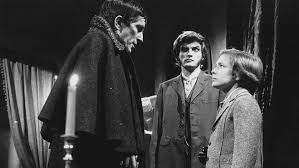
“It’s all well and good to bring Dark Shadows back to TV for nostalgia purposes, but there needs to be a good reason to do so. There has to be a reason for folks to tune in. There is still an audience, even though some of the original monster kids who ran home from school each day to watch it are sadly no longer with us. Those bringing it back really need to think about how to do it properly. House of Dark Shadows, the 1991 reboot, the pilot film, the Tim Burton comedy, and the off-Broadway play all structured their stories around retelling stories already told on the classic show. Each had its fun elements, but none of them were truly original by virtue of their having repeated what had come before.
“If Dark Shadows comes back from the grave in the 21st century, it needs to be more than just a zombie rehash of the past. It should feature the next generation of the Collins clan—or, really, the generation after that one, since 60 years have passed. No more reboots. No more retellings of Vicki’s arrival, David’s troubled childhood, Barnabas’s origins, etc. Continue the story in the modern day. The original Dark Shadows featured Collins generations from 1692, 1795, 1840, 1897, and the 1960s, as well as others in a parallel dimension. So, let’s see what the family is like now, while keeping the same Gothic tone it always had, with a focus not on real-world monsters or politics, but on classic literature and classic monsters. If anyone can successfully pull that off, I think Dark Shadows could indeed rise from its coffin and bring a whole new audience under its thrall.”
Sanderson shares enthusiasm for more. “Vampires are also treated differently in pop culture these days, as romantic figures or as practitioners of alternative lifestyles, whether it’s Joss Whedon’s Angel or Anne Rice’s vampires or Twilight. But the point of Barnabas in Dark Shadows is that he is a man valiantly coping with a curse that causes destruction to other people. Dark Shadows now has a classic feel, in contrast to contemporary vampire stories. Still, I would like to think that a new Dark Shadows series in the right hands could work.”
A humble soap opera could never imagine it would spawn something that continues to enthrall viewers to this day.
#Tags: {aionted Dreams, ABC, Art Wallace, Barnabas Collins, Ben Cross, Bewitched, Buffy the Vampire Slayer, Curse of Dark Shadows, Dan Curtis, Dark Shadows, David Selby, Frankenstein, General Hospital, Hermes Press, House of Dark Shadows, Humbert Allen Astredo, Jane Eyre, Jerry Lacy, Jonathan Frid, Kate Jackson, Ken Bald, Lara Parker, Marilyn Ross, Mark Dawidziak, Nancy Barrett, New York Daily News, Night of Dark Shadows, Peter Sanderson, Quentin Colllins, Rebecca, Rich Handley, Robert Cobert, Soap Opera, Supernatural, Thayer David, The Addams Family, The Portrait of Dorian Gray, These are my Children, Tim Burton, Vampire Diaries, WGN, William Svitavsky